
By a Working Mom Who’s Learning as She Goes
Last Saturday morning, I found myself sitting at the kitchen table with my five-year-old son, a half-empty bottle of vinegar in one hand and a box of baking soda in the other. My coffee had gone cold (again), my inbox was overflowing, and I had about six chores waiting to be done. But there we were—me in my bathrobe, him in his superhero pajamas—watching a foaming volcano erupt in the middle of our kitchen. And you know what? It was magical.
As a full-time working mom, I often feel like I’m running on autopilot—balancing deadlines, laundry, meetings, meals, and somewhere in between, trying to make meaningful memories with my child. Science experiments have become one of our favorite ways to bond. They’re simple, educational, and full of that wide-eyed wonder I sometimes forget about in the hustle of everyday life.
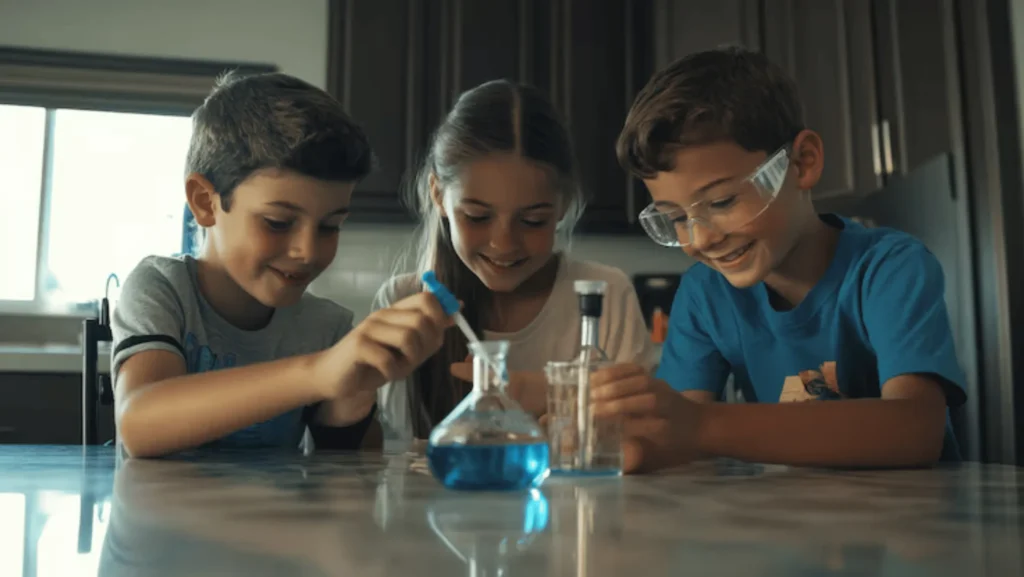
Why Science Experiments?
My son is naturally curious (aren’t they all?), always asking why the sky is blue or how airplanes fly. Instead of shrugging off his questions or giving him a quick YouTube video, I started looking for hands-on experiments we could do together. I’m not a scientist. I’m a mom who Googles everything and hopes for the best. But I’ve learned a few things along the way, and I want to share them with you—not just the experiments, but the messy, beautiful balancing act of motherhood that comes with them.
Time Management: Finding the Space Between Zoom Calls and Bedtime Stories
Let’s be real—finding time for science experiments (or anything fun, really) feels impossible when you’re buried under work and home responsibilities. I used to think we needed a full afternoon to do something worthwhile, but I’ve since learned that even 15-20 minutes is enough.
What Works for Us:
- Weekend mornings: Before the day runs away from us, we squeeze in an experiment after breakfast.
- Prep the night before: I gather materials once my son is asleep, so we’re not scrambling the next day.
- Use what you have: Many experiments require basic pantry items—like vinegar, dish soap, or food coloring—so no extra shopping trips!
One of our favorites is the classic Rainbow Milk experiment—just milk, food coloring, and dish soap. It takes five minutes and never fails to amaze.
Self-Care: Yes, You Still Matter
There have been days when I felt like a robot—get up, work, cook, clean, repeat. Doing science projects reminded me that I enjoy learning too. I felt joy watching colors swirl or bubbles fizz, and it gave me a chance to be present—not just physically, but emotionally.
This became part of my self-care. I stopped aiming for Instagram-perfect projects and started embracing the messy, noisy, joy-filled moments. Science experiments gave me permission to pause and play, which I desperately needed.
A Tip for You:
- Let go of the pressure to be perfect. If the slime doesn’t set, or your volcano is a dud, laugh it off. Your kid won’t remember the results—they’ll remember you being there.
Overcoming Guilt: Doing Enough Is Enough
Mom guilt is real. I used to beat myself up over missed school events or not reading enough bedtime stories. At one point, I even cried because I hadn’t taught my son the alphabet “on time.” But one evening, after we built a baking soda rocket on the balcony, he looked up and said, “You’re the best scientist mom ever.” I still tear up thinking about it.
That’s when I realized—these small, joyful moments count. They teach more than science; they teach connection, patience, and resilience.
Reminder:
- You don’t need to do everything. You’re already doing more than enough. One little project can create a big impact in your child’s life.
Work-Life Balance: Controlled Chaos Is Still Control
Balancing work and parenting isn’t about having everything under control—it’s about being okay with a little chaos. I keep a basket in the kitchen filled with basic experiment supplies. That way, if I get a surprise day off or a slow afternoon, we can jump into a project without planning.
How I Make It Work:
- Dedicated “learning play” time once a week: We call it “Science Saturday.” It gives us something to look forward to and provides a rhythm to our week.
- Be flexible: If I’m swamped, we’ll skip a week and double up later. Life happens, and that’s okay.
- Screen-free time: These experiments became our way to reduce screen time, especially during long winter evenings.
Our Favorite Simple and Safe Projects
Here are a few of our go-tos, all tested (and loved) by my son:
- Magic Rainbow Milk
- What you need: Whole milk, food coloring, dish soap, cotton swab.
- What happens: The soap breaks the surface tension of the milk, causing the colors to dance.
- Baking Soda Volcano
- What you need: Baking soda, vinegar, food coloring, dish soap, container.
- What happens: A bubbly eruption thanks to the acid-base reaction.
- Walking Water
- What you need: Cups, paper towels, food coloring, water.
- What happens: Capillary action causes colored water to “walk” between cups.
- Lava Lamp in a Bottle
- What you need: Oil, water, food coloring, Alka-Seltzer tablets.
- What happens: A groovy, bubbling lamp effect from gas bubbles rising.
- Invisible Ink Messages
- What you need: Lemon juice, Q-tips, paper, lamp.
- What happens: Heat reveals the secret writing—spy games, anyone?
Each of these takes less than 30 minutes and is safe, non-toxic, and requires zero science degrees.
Final Thoughts: You’ve Got This, Mama
If you’re reading this, chances are you’re already doing an amazing job. You’re showing up, juggling more than anyone sees, and still looking for ways to connect and enrich your child’s life.
Science experiments might not seem like much, but they’ve helped me feel more present, more joyful, and—dare I say it—more like the mom I always hoped I’d be. Not perfect. Just present.
So here’s your reminder:
You don’t need to do it all.
You just need to show up.
Your love, your effort, your presence—it’s enough.
Next time you’re feeling overwhelmed, grab a bottle of vinegar and a spoonful of baking soda. You might just find magic in the mess.
You’ve got this.